
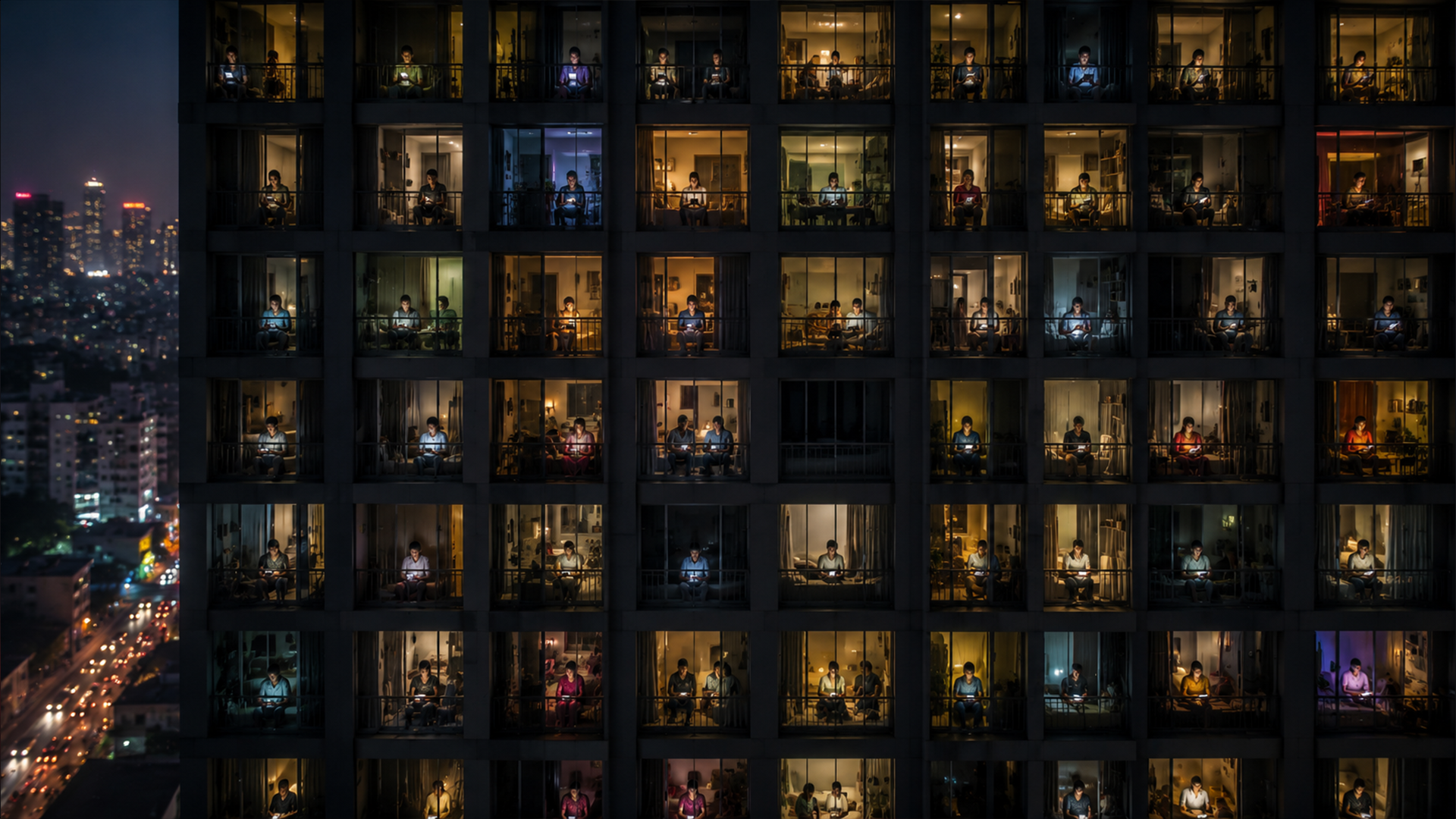
Vertical entertainment has emerged as one of the fastest-growing content formats in India, driven by smartphone adoption, affordable mobile data, changing viewing habits, and platform innovation. Within that broader shift, Vertical Micro Dramas represent the evolution from short-form content toward serialised mobile-first storytelling.
People did not suddenly start watching VMDs. They first changed how they consume entertainment.
That change matters strategically because India is not simply following a global trend. It is helping create a new entertainment behaviour at scale. The behavioural conditions already exist: cheap data, personal devices, heavy mobile usage, and a large audience that now treats the phone as the default screen for discovery and repeat viewing. In markets where those conditions are only partly present, vertical storytelling has to work harder. In India, the market is already prepared.
That is one reason India may become one of the most important VMD markets in the world. The format does not need to invent the habit from scratch. It builds on habits that are already in place and keeps extending them into more narrative-led experiences.
This is also why the conversation should not stop at smartphones or convenience. Vertical entertainment is growing because it fits how people actually live with media now. The phone is always near, easy to use, and private enough to make watching feel personal. Once that became normal, the door opened for a format that could be short, serialised, and emotionally sticky at the same time.
How India Became A Mobile-First Entertainment Market
India did not become a mobile-first market because one platform made a clever choice. It happened because the device most people carry all day gradually became the device they trust for entertainment, discovery, and repeat viewing.
The change started with access. Smartphones moved from premium products to everyday tools. Once that happened, entertainment began following the device rather than the other way around. People no longer needed to plan their viewing around a television set or a fixed screen. They could watch wherever they were, whenever they had a minute.
Affordable mobile data accelerated the shift. When data stopped feeling expensive, video consumption became far more casual. People could open apps, explore content, and move on without treating every view like a decision. That loosened the old rules of content consumption and created room for much more frequent, lighter interaction with video.
The result was not just more video consumption. It was a new relationship with entertainment. The phone became private, immediate, and always available. That made it far more competitive than shared household screens for many kinds of content, especially content designed to travel with the viewer throughout the day.
India’s entertainment consumption is also fragmenting. People are no longer choosing between one main screen and one main habit. They move between reels, shorts, OTT, creator content, podcasts, and now story-led mobile formats. That fragmentation matters because it creates more entry points for entertainment and more competition for attention. It also means a format does not need to dominate the whole day to matter. It only needs to fit a specific moment better than the alternatives.
The Smartphone Revolution
The smartphone gave Indian audiences a personal screen. That sounds obvious now, but it changed behaviour in a real way. What was once shared in a living room became individual, portable, and constant.
Affordable Data Changed Behaviour
When data became inexpensive, video stopped being something people rationed. Audiences could browse more freely, sample more content, and return more often without thinking too hard about cost.
The Move From TV Screens To Personal Screens
Television still matters, but the centre of gravity shifted. People became accustomed to watching in private, on demand, and in short bursts. That made mobile viewing feel natural rather than second best.
Why Convenience Became A Competitive Advantage
Convenience is often underrated in entertainment discussions. Yet in practice, the format that fits the moment tends to win attention first. Mobile-first entertainment won because it removed friction.
The Evolution Of Vertical Entertainment In India
Vertical video did not begin as a separate category of entertainment. It started as an adaptation — a way to make content feel native to the phone. Over time, it stopped looking like an adaptation and became a format in its own right.
That shift mattered because audiences grew used to the upright frame. What once felt like a social media compromise became the default way many people encountered video. Creator-led content helped normalise that behaviour. Short, personality-driven videos trained audiences to accept vertical framing as part of everyday viewing.
But the deeper reason vertical entertainment won was not only convenience. It was emotional proximity. Mobile is individual, while television is usually shared. On a phone, stories feel closer and characters feel closer because the viewing space itself feels private. That changes the tone of the experience. People are not just consuming a clip; they are spending time with something that feels meant for them alone.
As viewing habits changed, so did expectations. People became more comfortable with stories that arrived quickly, developed fast, and rewarded repeat attention. Across generations, the pattern was similar, even if the reasons varied. Younger audiences often accepted the format immediately. Older audiences adopted it because the device made it easy.
The important point is that vertical video stopped being something that needed justification. It became familiar. And once a format becomes familiar, creators and brands can do more with it.
From Social Video To Short-Form Entertainment
Early vertical content was often informal, reactive, or purely social. Over time, it became more structured and more entertainment-led.
The Growth Of Creator-Led Content
Creators helped audiences get used to vertical storytelling by making the frame feel native, not restrictive. They proved that upright video could carry personality and pace.
Why Audiences Became Comfortable Watching Vertically
People became comfortable because it matched how they already held their phones. The format was not asking them to change behaviour; it was meeting them where they were.
How Viewing Habits Changed Across Generations
Younger audiences adopted vertical video naturally. Older viewers accepted it because convenience outweighed formality. In both cases, the device shaped the habit.
Where Vertical Micro Dramas Fit Within Vertical Entertainment
Vertical Micro Dramas sit inside the larger move toward vertical entertainment, but they do something many short-form formats do not. They keep the fast, mobile-first delivery while adding episodic story pressure.
What makes a Vertical Micro Drama different is not just the frame. It is the fact that the viewer is being invited to come back. Short clips can entertain once. Serialised stories create a reason to return.
That shift from content to continuation is what gives the format its value. Audiences are no longer just consuming isolated moments. They are following characters, anticipating outcomes, and building a relationship with the story world.
This is where narrative-driven mobile entertainment starts to separate itself from simple video consumption. The frame stays vertical, but the intent changes. It is no longer about adapting a piece of content to the phone. It is about building a story that belongs on the phone, utilizing the structural rules found in our breakdown of The Anatomy Of A Successful Vertical Micro Drama.
What Makes A Vertical Micro Drama Different
A VMD is not just short video with dialogue. It is a serial story designed to keep the audience moving from one episode to the next.
The Shift From Content To Continuation
The real change is behavioural. Viewers are not just watching. They are deciding whether to return.
Why Episodic Storytelling Matters
Episodes create rhythm, anticipation, and memory. Without that structure, the format stays disposable.
The Rise Of Narrative-Driven Mobile Entertainment
Mobile entertainment is no longer only about speed. It is increasingly about stories that can survive inside a fast, vertical environment.
Why India Is Well Positioned For Vertical Micro Dramas
The global conversation around VMDs is useful, but India deserves its own lens. The same conditions that support mobile drama growth elsewhere already exist here, and in some cases they are stronger.
India has the audience scale, the smartphone dependence, the low-friction data environment, and the habit of daily mobile consumption. More importantly, it has a fragmented entertainment landscape where people already split time across many formats. That makes the country especially suitable for story-led mobile content, because the audience does not need to be converted to mobile behaviour first.
This is the strategic point that often gets missed. India is not waiting for the format to arrive. In many ways, it is already building the audience behaviour that the format depends on. That is why VMDs can scale here faster than in markets where mobile entertainment is still an add-on rather than the default.
The Success Of Mobile Drama Ecosystems
Where mobile drama ecosystems have grown, they have shown that people will follow serialized stories on phones if the story gives them a reason to return, answering the core psychological question of Why People Finish Some Stories And Abandon Others.
Changing Attention Patterns
Attention is not simply shorter. It is more distributed. Audiences move in and out of content throughout the day, and formats that fit that rhythm tend to travel well.
Why Serialized Stories Are Returning
Serial stories have never stopped working. They just needed a new delivery shape. Vertical Micro Dramas give them that shape.
What This Shift Means For Brands
For brands, the rise of vertical entertainment changes the basic problem. Attention is getting harder to buy, and interruptions are getting easier to ignore.
That is why entertainment is increasingly replacing interruption. Audiences will still notice ads, but they are more likely to stay with a story that earns their time. VMDs fit into that shift because they allow brands to show up inside an entertainment experience instead of trying to cut across it.
The bigger commercial change is the shift from campaigns to story worlds. A campaign tries to win a moment. A story world tries to build a relationship. That is a different game, and the brands that understand it are usually the ones that stop thinking in impressions and start thinking in return visits, memory, and follow-on interest.
The opportunity is not simply to place a logo inside a format. The opportunity is to build a long-term audience relationship through stories people actually want to follow. That is more valuable than a single burst of attention because it creates memory, familiarity, and repeat contact.
.
Attention Is Becoming Harder To Buy
People are more selective now. A brand only gets a few seconds before it is judged, skipped, or ignored.
Why Entertainment Is Replacing Interruption
Stories are easier to keep than ads. They feel less forced and give audiences a reason to stay.
Where VMDs Fit Inside Modern Brand Strategy
VMDs give brands a way to earn attention through narrative rather than demanding it through interruption, which is the core reason Why Vertical Micro Dramas Are Becoming A Brand Format.
The Opportunity For Long-Term Audience Relationships
The stronger commercial outcome is not a one-time view. It is a relationship that can be built episode by episode.
What This Shift Means For Platforms And Creators
Platforms and creators are operating in a very different environment than they were a few years ago. There is more demand for original stories because audiences are tired of repetitive, interchangeable content.
That creates room for new monetisation models, especially where serial storytelling can support recurring attention. Creators who can hold viewers across episodes have a clear advantage, because retention becomes part of the product itself.
Platforms notice that quickly. The content that keeps people returning is the content that creates value beyond the first click. That is why retention is becoming a more important signal than sheer reach.
More Demand For Original Stories
Audiences are looking for something that feels distinct rather than recycled.
New Monetisation Models
When a story can keep people coming back, it can support new forms of monetisation beyond one-off views.
Audience Retention As A Competitive Advantage
Creators and platforms that can hold attention over time will usually outperform those that rely on a single spike.
Where Vertical Entertainment In India Is Headed Next
The next stage of vertical entertainment in India looks less like a sudden break and more like a steady expansion of what already works.
More serialized storytelling is likely because audiences have already shown they can follow stories on mobile. Creator-led IP is also becoming more visible, as individual voices and recurring worlds become easier to build around. Branded entertainment is growing too, because brands want formats that can hold attention without feeling like interruptions.
The broader direction is clear even if the exact products change. Mobile-first story worlds are becoming more normal, and the companies that understand the format early are likely to shape how it develops.
More Serialized Storytelling
Stories that unfold over time tend to fit the mobile environment better than one-off pieces.
Creator-Led IP
Creators with recognisable voices can build stronger audience loyalty when their work becomes repeatable.
Branded Entertainment Growth
Brands are increasingly looking for stories that can carry their message without feeling like ads.
The Future Of Mobile-First Story Worlds
The more audiences get used to following stories on phones, the more room there is for richer, recurring worlds.
Why This Matters More Than It Appears
The rise of Vertical Entertainment is not simply a content trend. It reflects a deeper shift in how audiences discover, consume, and follow stories.
That matters because entertainment habits usually change before strategy does. By the time a brand or platform notices the shift, the audience has already moved. Vertical entertainment is one of those changes that looked small at first and now feels structural.
Vertical Micro Dramas are simply one of the clearest examples of where that evolution is heading. They show how mobile-first behaviour, serialized storytelling, and audience convenience are starting to align in one format.
FAQ
When did vertical entertainment really start growing in India?
It grew gradually as smartphones became more common and mobile data became more affordable. The format took off when audiences started spending more time watching on phones than on shared screens.
Why are people watching more content on phones?
Because phones are personal, always available, and easier to use throughout the day. They fit into short breaks and private viewing moments better than television does.
How are Vertical Micro Dramas different from short-form videos?
Short-form videos are often standalone. Vertical Micro Dramas use the same mobile-first frame but add serial storytelling, character movement, and a reason to return.
Are Indian audiences ready for episodic mobile entertainment?
Yes. Indian audiences have already spent years getting used to mobile viewing, short-form video, and creator-led content. Episodic mobile entertainment fits that behaviour well.
Can brands use Vertical Micro Dramas in India?
Yes. Brands can use them to build story-led audience relationships, especially when they want attention that feels more earned than interruptive.
Why is vertical video becoming more popular?
Because it matches how people hold and use their phones. It also feels native to the way audiences already consume social and entertainment content.
What role does affordable data play in content consumption?
Affordable data removed a major barrier to video viewing. It made content sampling, repeat viewing, and casual browsing much easier.
How do platforms view VMD content?
Platforms usually see value in formats that can hold attention, encourage repeat viewing, and create new audience habits. VMDs do all three when executed well.
Is vertical entertainment replacing traditional entertainment?
Not replacing entirely, but it is clearly becoming a larger part of how people discover and follow stories. The phone is now central to the experience.
Is this a long-term shift or a passing trend?
It looks like a long-term shift because it is built on behaviour, not novelty. Once viewing habits change at the device level, the format tends to follow.
Conclusion
Vertical entertainment in India is no longer just a new format category. It reflects a deeper change in audience behaviour: people now expect entertainment to be mobile, immediate, and easy to return to.
Vertical Micro Dramas sit naturally inside that shift because they combine the convenience of vertical viewing with the pull of episodic storytelling. That makes them one of the clearest signs of where Indian entertainment is heading.
Vertical entertainment is no longer an emerging format in India. It is increasingly becoming the environment in which audiences discover, consume, and follow stories. Vertical Micro Dramas are simply one of the clearest examples of where that evolution is heading.